I understand art as inherently political. This belief is foundational to my practice and guides my use of artmaking as a critical tool for education, collective awareness, and resistance. Through my work, I actively challenge the systems and institutions that continue to normalize oppression and sustain cultures of bodily harm. Art, for me, is not neutral; it is a site of intervention. One that can expose inequities, question power, and sparking dialogue for imagining alternative ways of being.
Working at the intersection of activism, education, and artistic practice, I employ both visual art and writing to initiate dialogue and invite sustained reflection. My work asks viewers to consider how frameworks such as state legislation, cultural norms, and deeply embedded individualistic ideologies shape lived experience in unequal ways—often determined by perceived and actual identities. By making these forces visible, I aim to disrupt the notion that harm is isolated or accidental, instead situating it within larger social, political, and institutional structures.
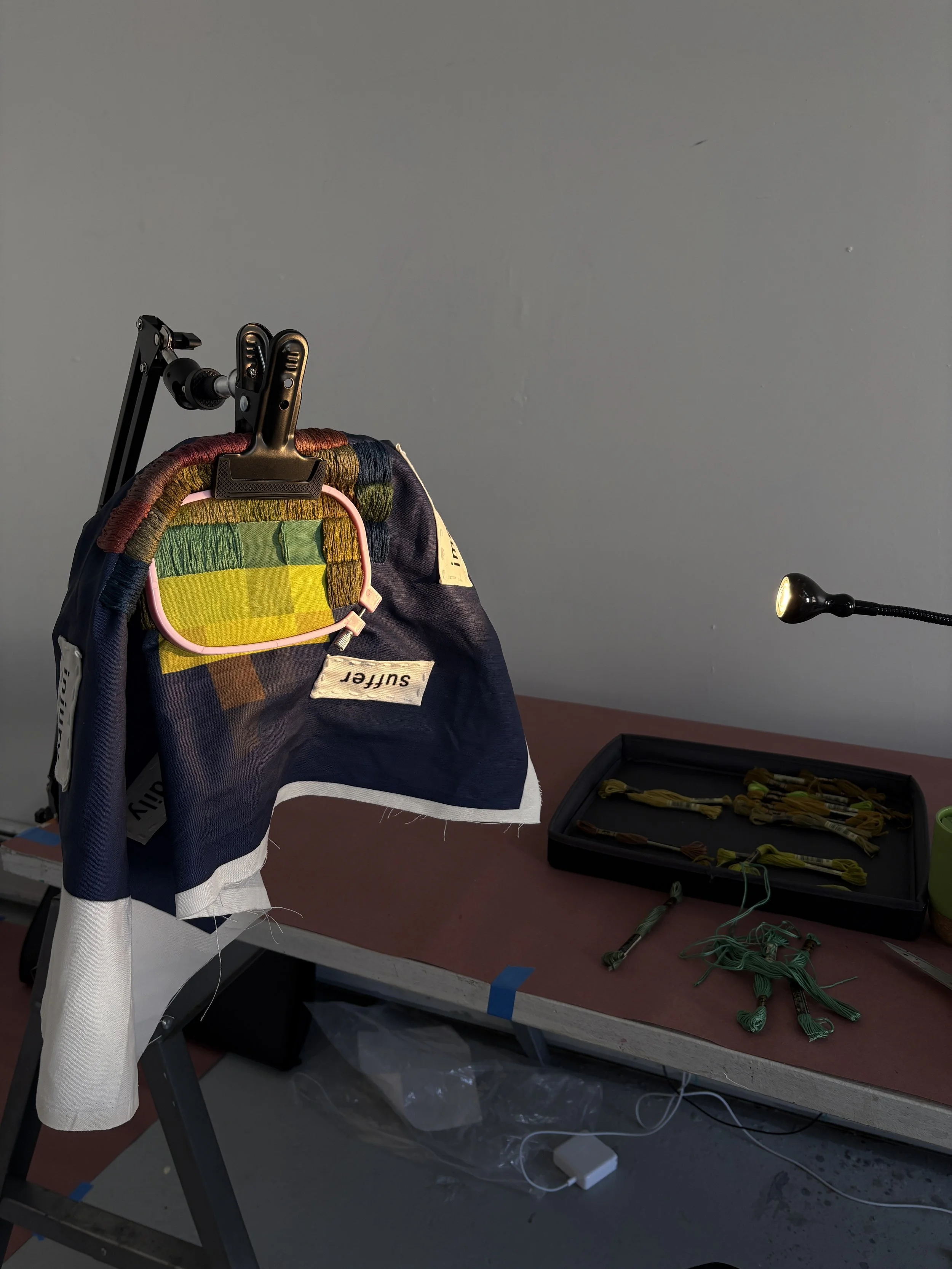
Fiber art has become a central material language in my practice and a critical tool for engaging with topics that are traumatic for some and deeply complex for many. Earlier in my artistic career, I relied heavily on photography and video to address these themes. While those mediums allowed for urgency and confrontation, they were often received as too visceral or abrasive, limiting access for broader audiences. My turn toward fiber is intentional: it allows for a slower, more contemplative engagement—one that encourages thoughtful, meaningful, and inclusive dialogue rather than shock alone. Through this material shift, I seek to foster spaces for reflection that can hold both discomfort and care, creating openings for connection, accountability, and change.
As a victim-survivor of intimate partner violence and sexual assault, my work is deeply informed by lived experience. I critically examine the systems that perpetuate, excuse, and normalize sexual violence, tracing how power operates across both personal relationships and institutional frameworks. Projects such as United States of…, along with more recent works like DOMINATE and CONTROL, investigate the intersections between interpersonal dynamics and broader structures of authority. These bodies of work question how strategies of manipulation, coercion, and control are mirrored across scales—how the logic of institutions often mimics the tactics of abuse, and how each reinforces the other.
Ultimately, my practice is about exposure and disruption: revealing what is often concealed, naming what is routinely minimized, and creating work that insists on reckonings rather than silence. Through material, process, and narrative, I aim to contribute to a visual and conceptual language that not only documents harm, but also supports collective understanding and the possibility of transformative change.